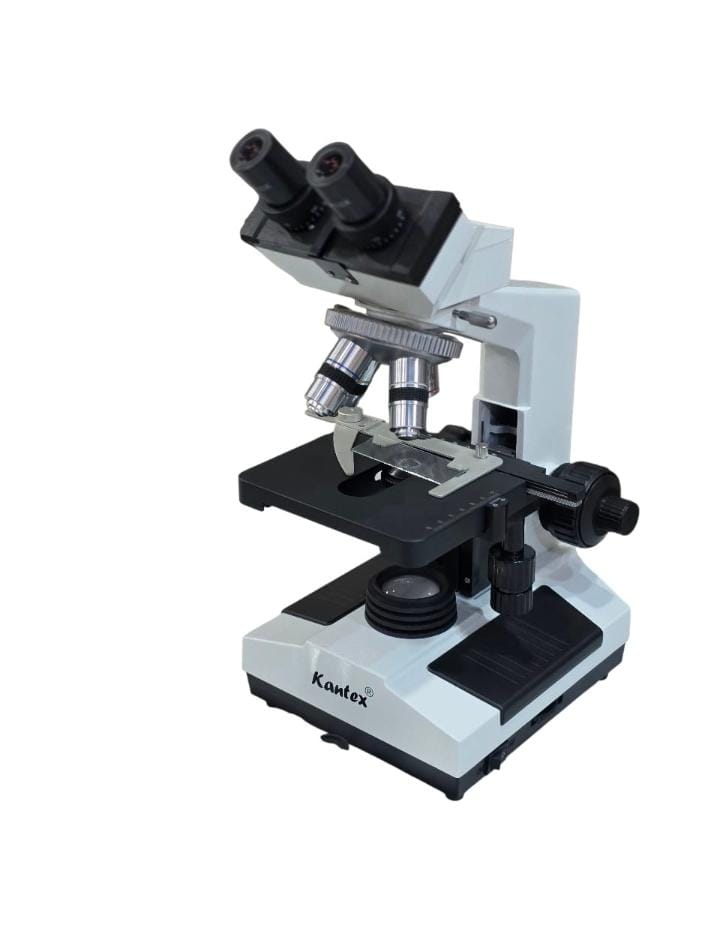
A Binocular Microscope is a precision laboratory instrument designed for comfortable and accurate observation of microscopic specimens using two eyepieces, allowing natural vision and reduced eye strain. It is widely used for routine analysis, research, and educational purposes where clear magnification and depth perception are required.
How to Use a Binocular Microscope
- Place the specimen slide on the stage and secure it with stage clips
- Adjust the interpupillary distance to fit your eyes
- Start with the lowest objective lens and focus using the coarse knob
- Fine-tune the image with the fine adjustment knob
- Increase magnification as needed while adjusting illumination
Laboratories Where It Is Commonly Used
- Biology Laboratories – cell and tissue examination
- Chemistry Laboratories – crystal and compound observation
- Medical & Pathology Labs – blood, bacteria, and specimen analysis
- Microbiology Labs – microorganism identification
- Educational Labs – student training and demonstrations
- Industrial Labs – material inspection and quality control
Benefits of a Binocular Microscope
- Reduces eye fatigue during long observation sessions
- Provides clearer and more detailed images
- Improves depth perception and viewing comfort
- Suitable for continuous laboratory work
- Accurate results for analysis and research
Where It Can Be Used
- Educational institutions
- Research laboratories
- Medical and diagnostic centers
- Industrial quality control units
- Environmental testing labs
Where It Can Be Used
- Educational institutions
- Research laboratories
- Medical and diagnostic centers
- Industrial quality control units
- Environmental testing labs